EcoGuard AI
Environmental Risk and Resource Management AI System
An integrated AI and IoT environmental monitoring platform for Sri Lanka, covering flood risk, air quality, heat stress, and coral reef health with real-time dashboards, alerts, and intelligent assistance.
Air Quality Monitoring System
Heat Risk Prediction System
Coral Reef Monitoring System
Domain
Research foundation, objectives, and technical scope of the EcoGuard AI system aligned with final-year project requirements.
System summary
EcoGuard AI is an integrated AI and IoT-based environmental intelligence system for Sri Lanka. It combines ESP32 edge devices, machine learning pipelines, a PostgreSQL-backed application layer, real-time web dashboards (including WebSocket updates), SMS alerts, and an AI chatbot to support risk detection, early warning, and operational decision-making across four environmental domains.
Literature Survey
Single-hazard environmental monitoring systems have been widely studied using statistical analysis, Artificial Intelligence, machine learning, IoT technologies, and real-time communication systems. Existing flood monitoring studies mainly rely on hydrological analysis and historical environmental datasets for flood risk evaluation [1]. Air quality monitoring systems increasingly use IoT sensor networks and cloud-based visualization for urban environmental monitoring [2]. Heat risk monitoring research applies machine learning forecasting techniques and environmental analysis for temperature prediction and risk assessment [3]. Similarly, coral reef monitoring systems use deep learning models such as CNNs and ResNet architectures for coral classification and bleaching detection using underwater imagery and historical reef datasets [4]. However, most existing systems focus on individual environmental domains and lack integrated multi-module environmental intelligence platforms with real-time monitoring, intelligent analysis, and unified alert management capabilities.
Research Gap
Existing systems and commercial offerings often lack one or more of the following:
- Multi-domain environmental monitoring within a single integrated platform
- Real-time IoT integration with centralized environmental data processing
- AI-based prediction, classification, and explainable environmental guidance
- Intelligent SMS and web-based alerting linked to severity transitions
- User-friendly dashboards with integrated visualization and chatbot support
- Localization for Sri Lankan environmental and infrastructure conditions
- Scalable architectures for integrated environmental risk management
References
- R. J. Abrahart, P. E. Kneale, and L. M. See, Neural Networks for Hydrological Modeling. London, U.K.: Taylor & Francis, 2021.
- S. Verma, A. Sharma, and R. Gupta, “Cloud-integrated smart air quality monitoring system using IoT technology,” IEEE Access, vol. 9, pp. 74610–74620, 2021.
- H. Chen, Y. Zhao, and X. Li, “LightGBM-based time series forecasting for environmental data prediction,” Applied Soft Computing, vol. 134, art. no. 110012, 2023.
- D. P. Roy et al., “Deep learning for coral reef mapping and monitoring using underwater imagery,” Remote Sensing, vol. 12, no. 18, pp. 1–20, 2020.
Research Problem
Current environmental monitoring deployments typically emphasize one risk area at a time. Sri Lanka requires a unified system capable of monitoring floods, air quality, heat risk, and coral reef condition together using continuous sensor and image data, ML models, operational dashboards, and multi-channel alerts so that communities and stakeholders receive coherent, timely information.
Research Objectives
- Develop an integrated AI and IoT-based environmental monitoring system (EcoGuard AI).
- Monitor flood risk using ultrasonic and float sensors on ESP32 with severity classification.
- Monitor air quality using CO, CO2, NH3, PM2.5, and temperature with health-oriented bands.
- Predict heat risk using weather data, IoT readings, and LightGBM models.
- Detect coral bleaching using image classification and complementary water quality parameters.
- Deliver real-time dashboards, SMS and web notifications, and chatbot-based recommendations.
Methodology and system overview
End-to-end pipeline from sensing to stakeholder communication.
How the system works
-
1
Data collection
IoT sensors, coral image uploads, external weather APIs, and curated historical datasets.
-
2
Communication
ESP32 devices transmit readings over Wi-Fi to the ingestion layer.
-
3
Processing
Coral: ResNet-18 / CNN image classification. Heat:eshold-based severity classification (six levels). Air quality: threshold-based pollutant classification (Good / Moderate / Poor).
-
4
Storage
PostgreSQL for structured telemetry, events, and user-facing aggregates.
-
5
Visualization
Web dashboard with real-time updates (including WebSocket channels where applicable).
-
6
Alerts and assistance
SMS alerts, in-dashboard notifications, and an AI chatbot for contextual guidance.
Technologies used
HTML / CSS / JavaScript
ESP32
Node.js / Express
Python / FastAPI
PostgreSQL
WebSocket
LightGBM
ResNet-18 / CNN
IoT sensors
SMS gateway
AI chatbot / LLM
Module details
Per-domain sensing, analytics, and delivery mechanisms.
Flood monitoring and alert system
Hardware: ESP32 with ultrasonic sensor and float switch. Severity levels: Normal, Alert, Minor, Moderate, Major, Critical.
The dashboard uses WebSocket streams for live water levels, a notification bell for web users, and SMS alerts when severity changes (not on every identical reading), reducing alert fatigue while preserving safety.
Air quality monitoring system
Sensors: MQ-7, MQ-135, ENS160, PM2.5 module, and DHT22 for temperature support. Signals: CO, CO2, NH3, PM2.5, and temperature.
Air quality is classified as Good, Moderate, or Poor. The solution supports QR-based dashboard access, SMS alerts for deteriorating bands, live charts, and chatbot guidance for protective actions.
Heat risk prediction system
Combines weather fields, on-site temperature and humidity from IoT, the Open-Meteo API, scheduled jobs via APScheduler, and LightGBM to forecast temperature, humidity, and solar radiation for 1–15 days.
The service computes the Heat Index and maps outcomes to Normal, Caution, Extreme Caution, Danger, and Extreme Danger bands for public-facing messaging.
Coral reef monitoring system
Accepts coral imagery alongside water quality indicators such as pH, turbidity, and temperature. A ResNet-18 model classifies reefs as Healthy, Partially bleached, or Fully bleached.
Outputs can be correlated with river water quality indicators where available; the chatbot summarizes model outputs and contextual risk for non-expert users.
Milestones
CDAP-aligned deliverables from proposal through evaluation.
-
01
Project proposal
Scope, objectives, and feasibility of the integrated EcoGuard AI architecture.
-
02
Progress presentation I
Initial design, sensor selection, and baseline literature alignment.
-
03
Progress presentation II
Implementation progress, model integration, and dashboard demonstrations.
-
04
Research paper
Formal documentation of methods, experiments, and evaluation metrics.
-
05
Final report
Consolidated group and individual reporting for the complete system.
-
06
Final presentation
Capstone demonstration of integrated modules, alerts, and chatbot assistance.
-
07
Viva
Academic evaluation and Q&A on design decisions, ethics, and deployment considerations.
Documents
Formal deliverables and reference materials for the EcoGuard AI project.
Project Charter
Project charter document for scope, goals, and responsibilities.
Checklist
Project checklist for tracking required submissions and milestones.
Proposal Documents
Individual research proposals and technical designs submitted by each team member.
Research Paper
Published IEEE-style research paper describing the proposed system and results.
Final Group Report (Final Thesis)
Complete group thesis including system design, implementation, and evaluation.
Individual Thesis
Final individual reports submitted by each team member.
Presentations
Milestone slides and demonstration decks.
Proposal presentation
View DocumentProgress presentation I
View DocumentProgress presentation II
View DocumentFinal presentation
View DocumentAbout us
Final-year research team, Faculty of Computing, SLIIT

Godawela S.M
Final-year IT undergraduate
Coral reef monitoring module
Nissanka L.R.S.L
Final-year IT undergraduate
Air quality monitoring module
Gimsara W.T.G
Final-year IT undergraduate
Flood monitoring module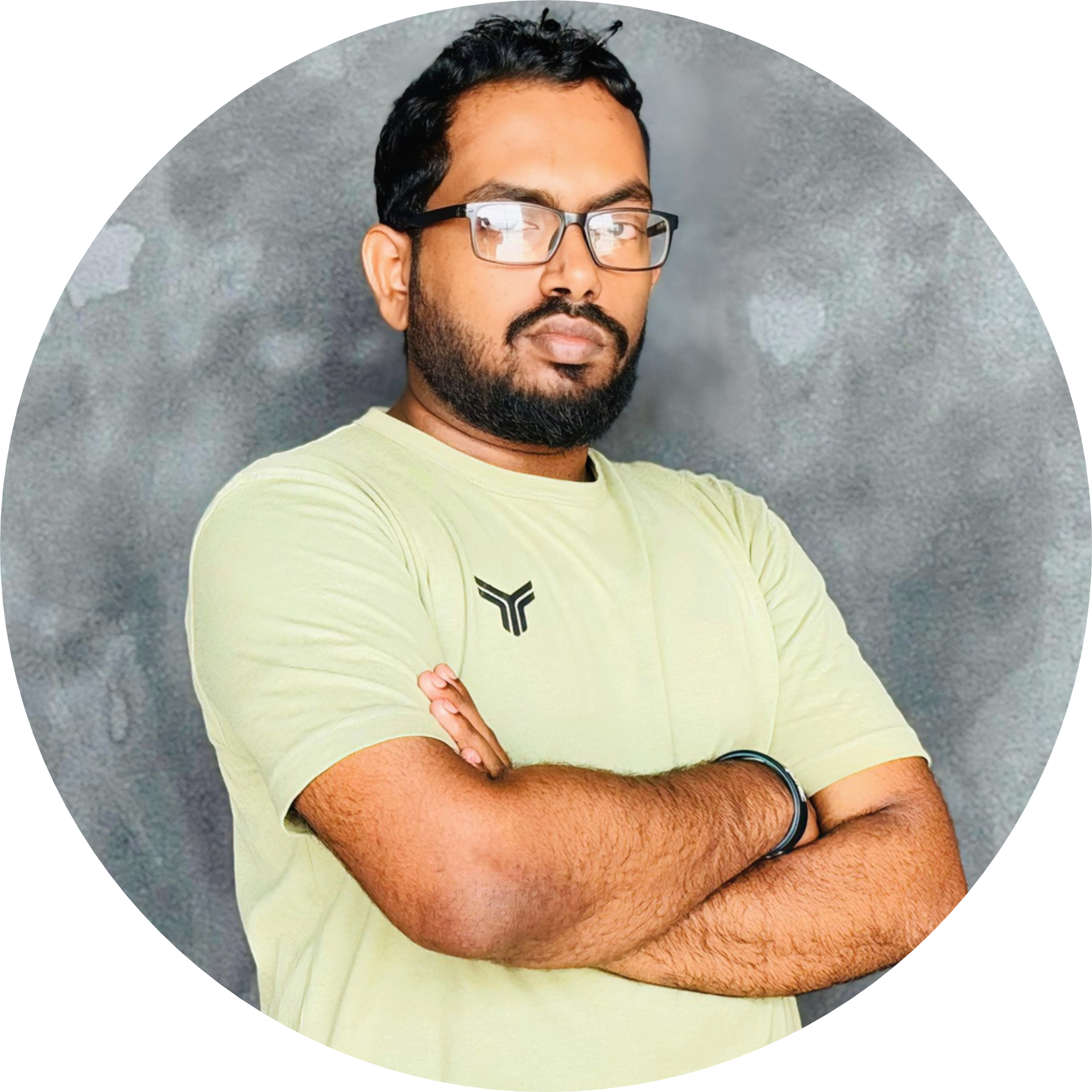
Lakshan K.K.C
Final-year IT undergraduate
Heat risk prediction module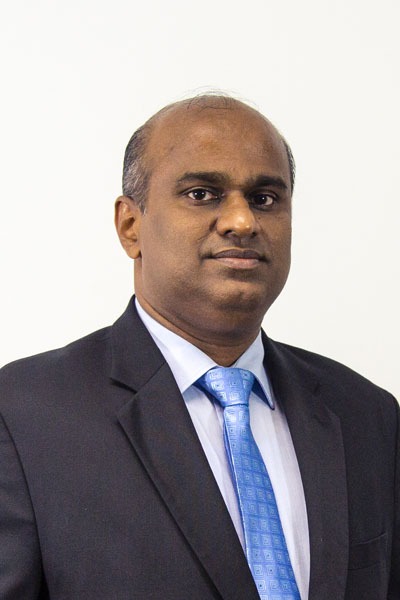
Prof. Koliya Pulasinghe
Research group supervisor
Supervisor
Ms. Rangi Liyanage
Research group co-supervisor
Co-supervisorContact us
Collaboration, evaluation feedback, and academic correspondence.
Contact Information
Email: info@ecoguard.site
Phone: +94 787969803
Location: Sri Lanka Institute of Information Technology, New Kandy Road, Malabe, Sri Lanka.